Why Large Colonies Are the Hardest Case
Counting bats at a small roost remains manageable. At a major colony, it is a different problem altogether. When hundreds of thousands of individuals leave the roost within a very short time, the flows are dense, trajectories cross, animals overlap for a few frames, and no observer can keep a reliable tally for long. Reviewing the recording afterwards changes little: the video is full of bats, and every second demands attention.
These sites are also the ones that matter most for conservation. A large colony concentrates a significant share of a regional population in a single place: an accurate, reproducible count is therefore the basis of any monitoring or protection decision.
The Case
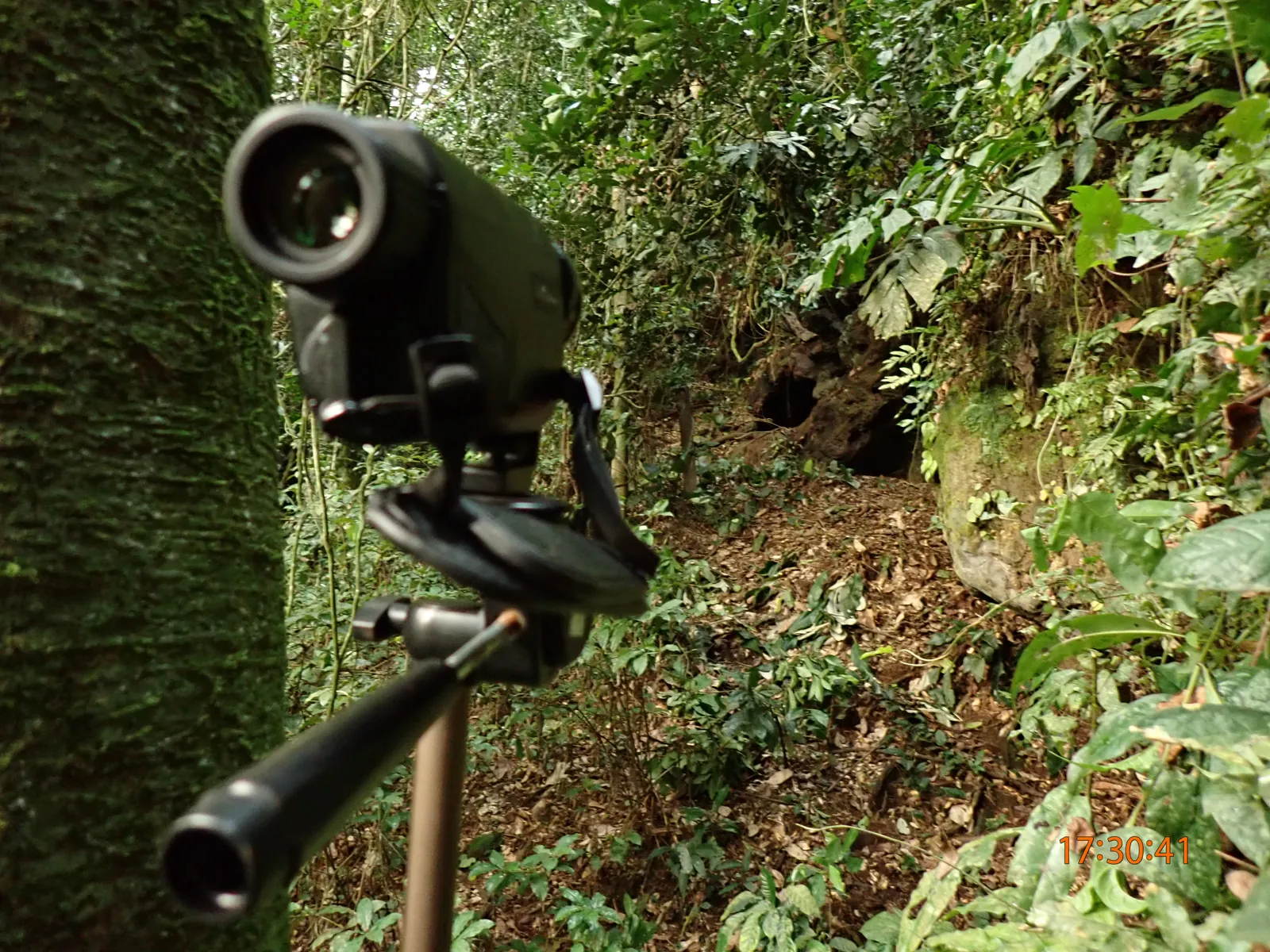
Biotope, an environmental consultancy, recorded the emergences of several very large colonies in thermal video and processed these recordings with TrackBats.
The goal was to obtain a reliable count of emerging individuals with a replicable protocol.
What the Analyses Produced
From a single thermal recording, TrackBats automatically provided:
- A count of the individuals crossing the counting line, with the emergence flow over time.
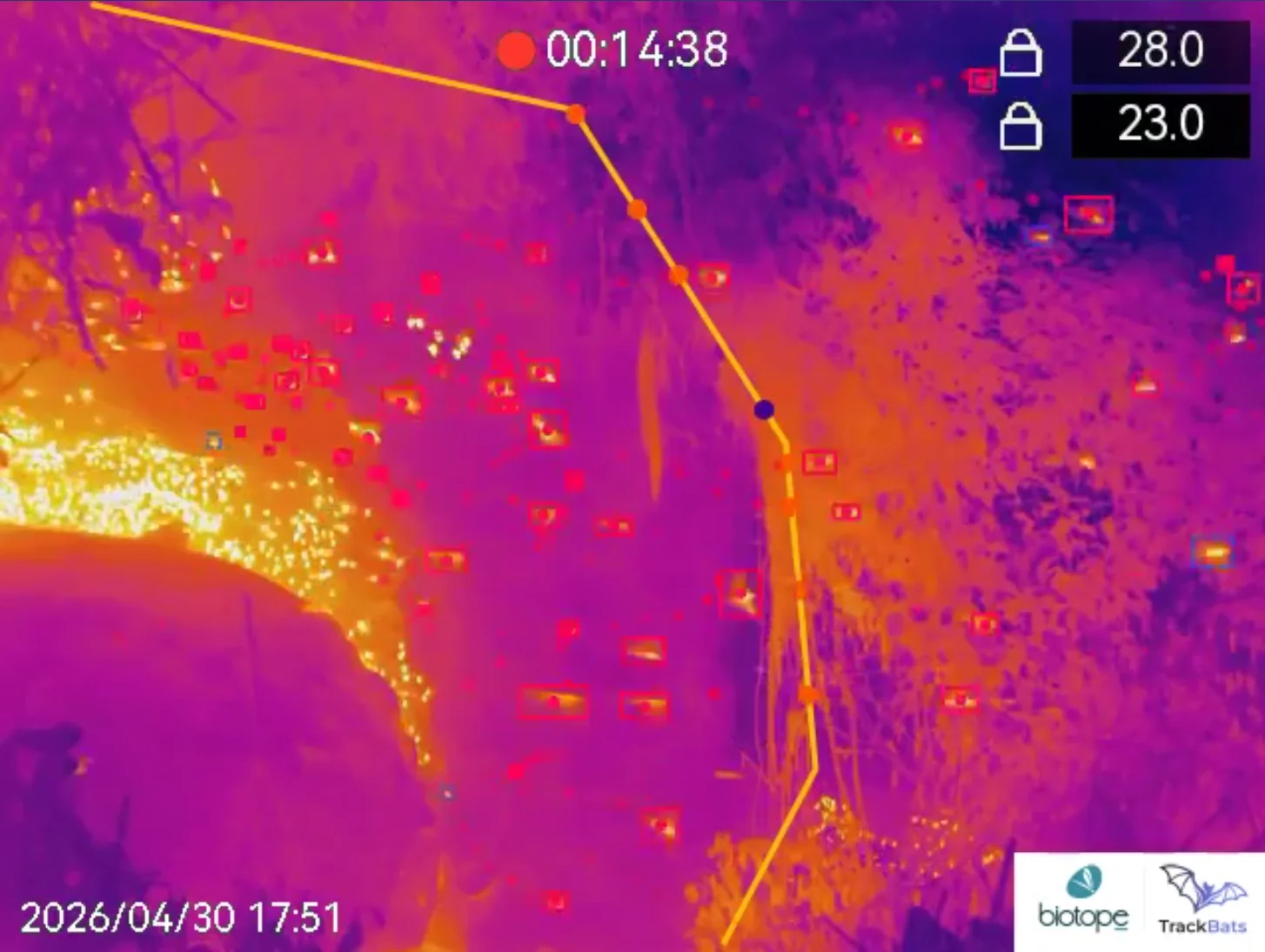
Several visits to the same site provided complementary information: population dynamics and roost type (maternity, swarming, resting roost...).
What This Changes for Ecologists
For large colonies, automatic counting changes what can be monitored. The same method can be applied from one campaign to the next, making counts comparable across sites and years. Trajectories and the heatmap add spatial information that neither a manual count nor an acoustic survey can provide.
Thanks to Biotope for their trust in this project.
Read also